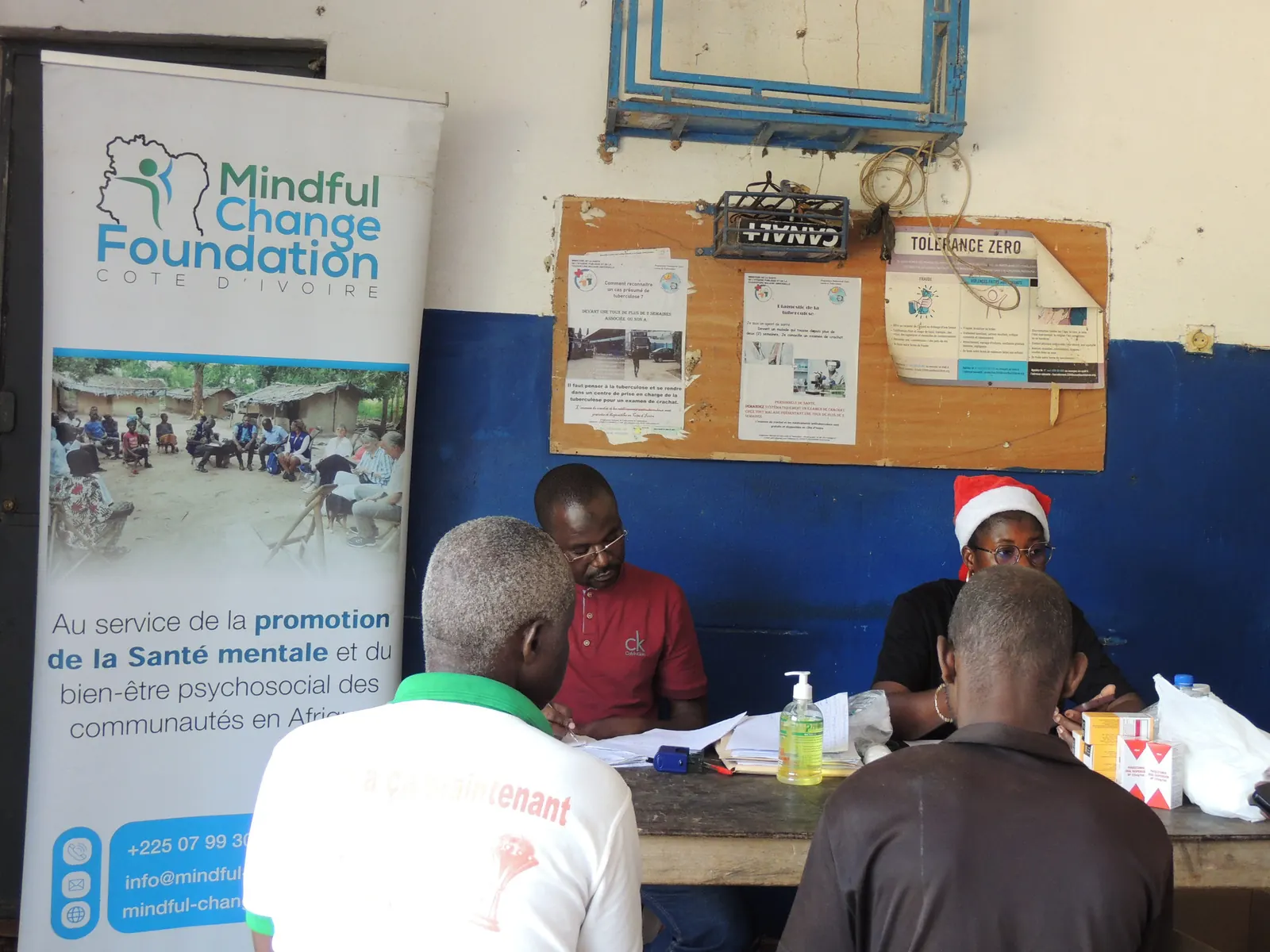
Prise en charge psychiatrique
Consultations foraines, suivi médical et médicaments psychotropes gratuits rapprochés des communautés rurales, en partenariat avec l'Hôpital Psychiatrique de Bouaké.
Air-France 2/3, Bouaké — Côte d'Ivoire+225 07 99 30 63 38info@mindful-changeci.org
Santé mentale communautaire — depuis 2020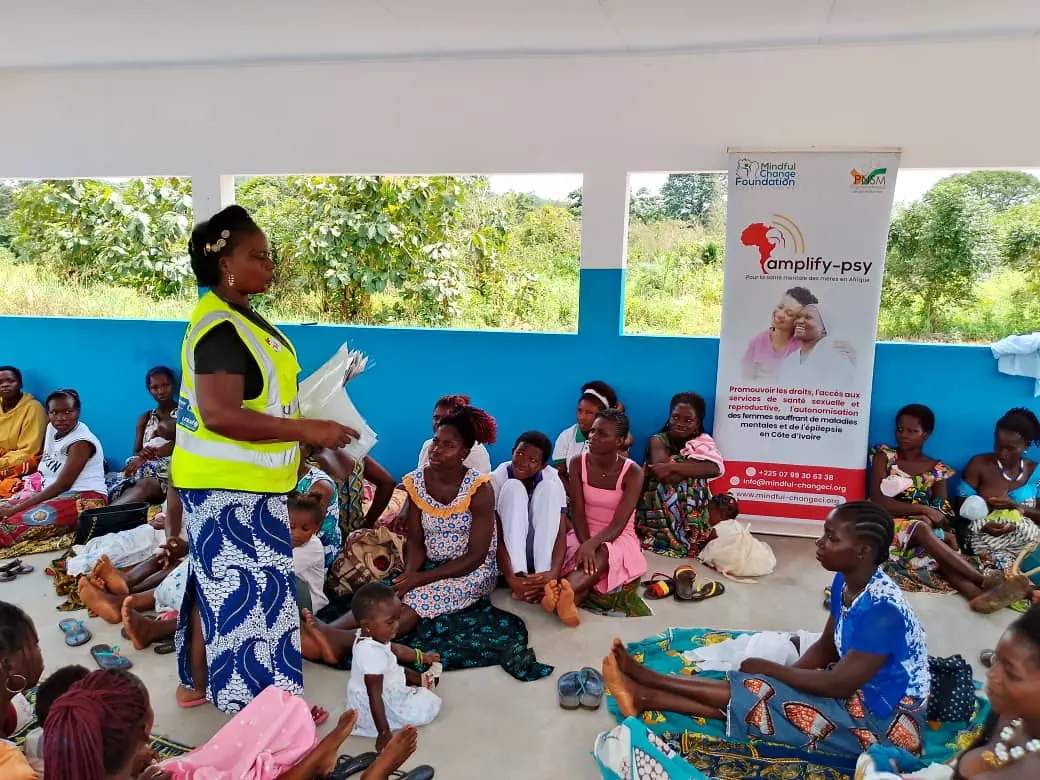
ONG de santé mentale — Bouaké, Côte d'Ivoire
Depuis 2020, MCF-CI rapproche les soins psychiatriques et psychologiques des communautés rurales, défend les droits des personnes vivant avec une maladie mentale et l'épilepsie, et construit une santé mentale maternelle inclusive — aux côtés du Ministère de la Santé et du PNSM.
Impact 2025
Chaque chiffre est une personne touchée par nos programmes SAMENTACOM et AMPLIFY PSY, vérifiables dans nos rapports annuels.
Ce que nous faisons
Une chaîne de soins complète : du village jusqu'à l'Hôpital Psychiatrique de Bouaké, de la sensibilisation jusqu'à l'insertion économique.
Consultations foraines, suivi médical et médicaments psychotropes gratuits rapprochés des communautés rurales, en partenariat avec l'Hôpital Psychiatrique de Bouaké.
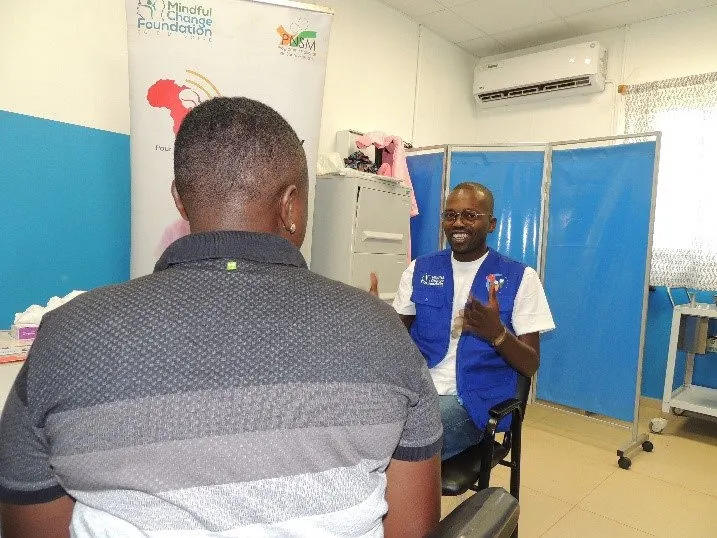
Centre d'écoute intégré depuis 2024 : séances individuelles et de groupe pour les PVMME et le grand public — travailleurs, couples, étudiants, enfants.
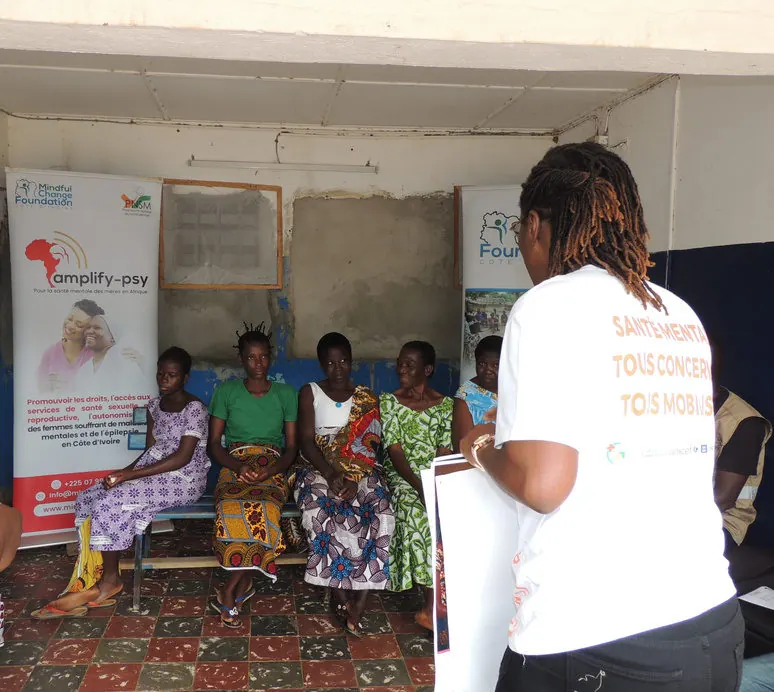
Dépistage des troubles mentaux maternels intégré aux soins SSR/PF par les sages-femmes formées (projet pilote AMPLIFY PSY en région Gbêkê).
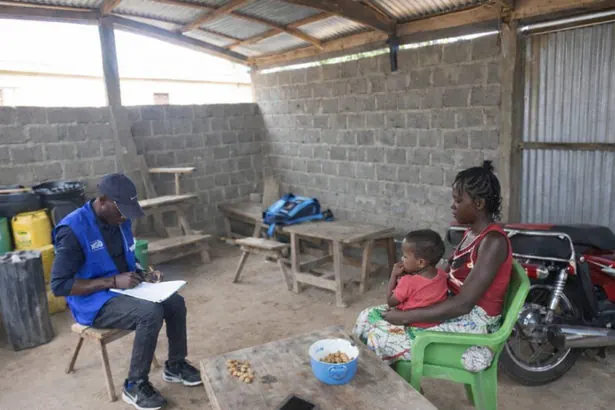
Enquêtes sociales, enrôlement à la Couverture Maladie Universelle et futurs projets d'épargne communautaire pour les PVMME.
Nos programmes
De la santé mentale communautaire des zones rurales à la santé mentale maternelle : nos programmes transforment durablement le paysage sanitaire ivoirien.
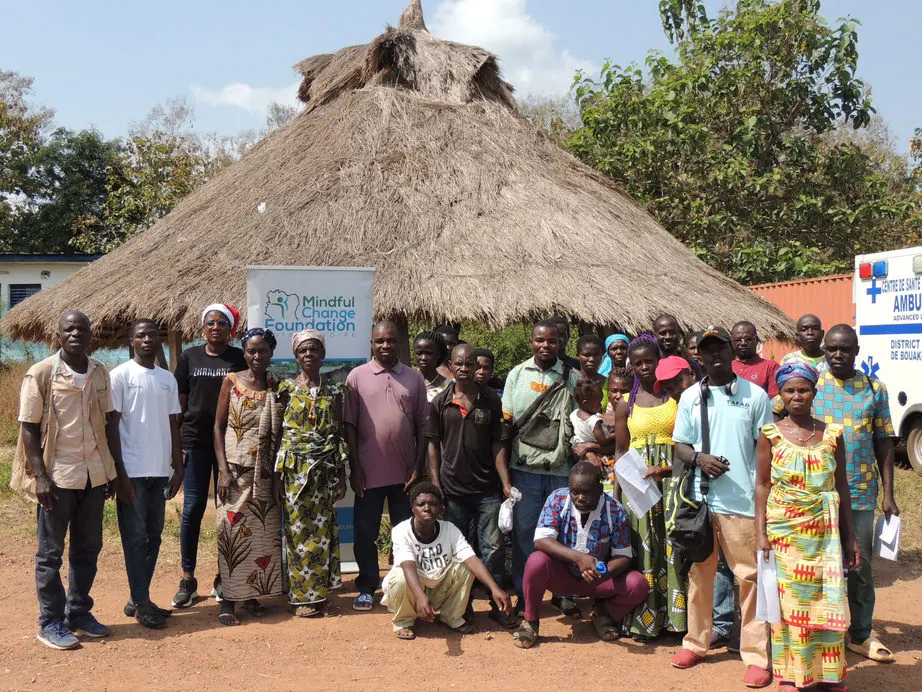
Depuis 2018
Le projet de référence : consultations psychiatriques foraines dans 4 régions, centre d'écoute psychologique, distribution gratuite de 380 000+ produits pharmaceutiques et réseau d'Agents de Santé Communautaires.
288+
nouveaux cas
3 188
personnes sensibilisées
4
régions couvertes
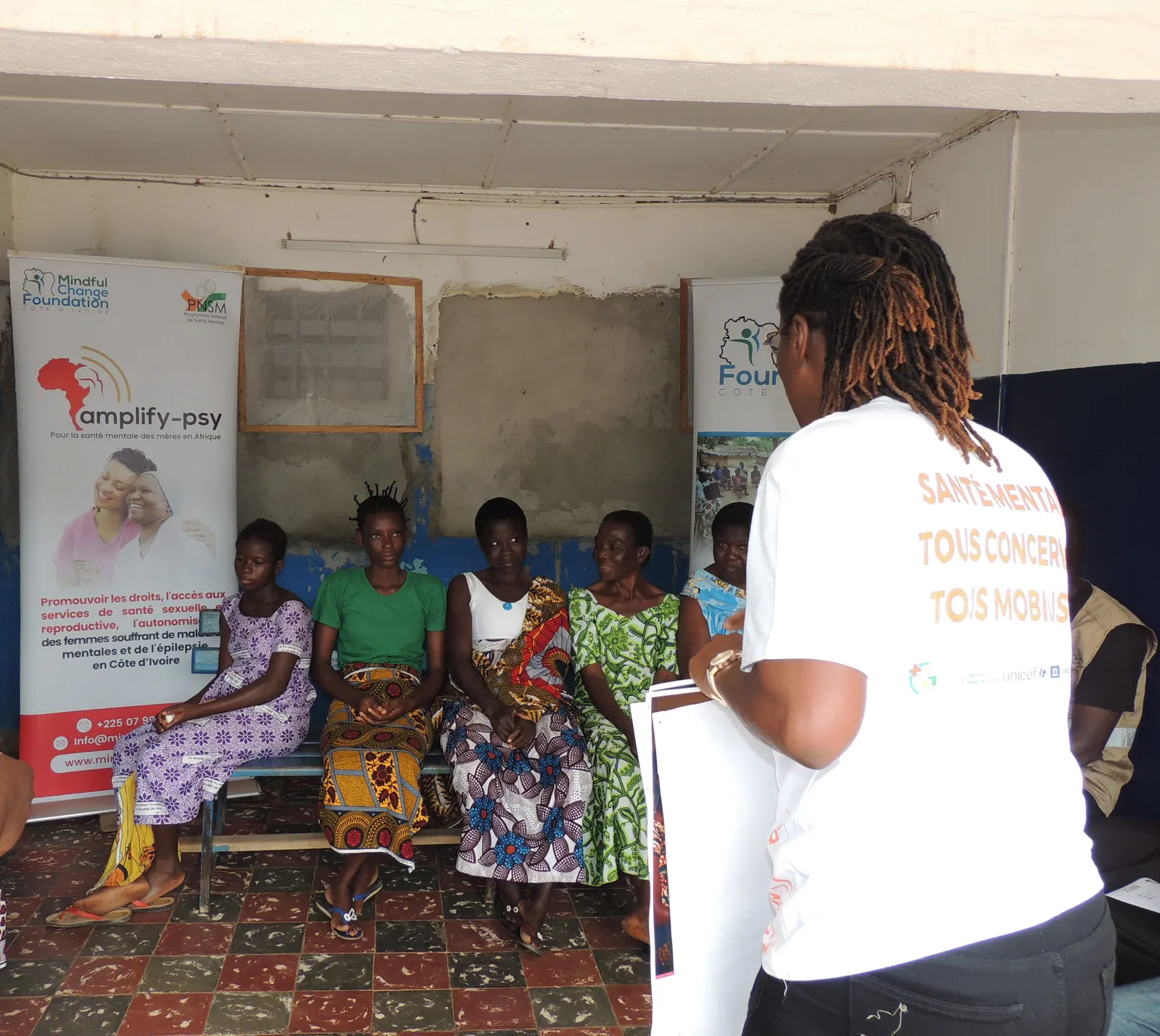
Projet pilote 2025
L'innovation 2025 : dépistage des troubles mentaux maternels intégré aux soins de santé sexuelle et reproductive. 4 905 femmes touchées en 5 mois — 491 % de l'objectif — et un modèle validé pour passer à l'échelle.
4 905
femmes sensibilisées
131
prises en charge
3
centres pilotes
8 affirmations tirées de notre expérience de terrain. Saurez-vous démêler le vrai du faux ?
Ils témoignent
« Grâce aux consultations foraines, mon fils épileptique reçoit enfin un traitement régulier. »
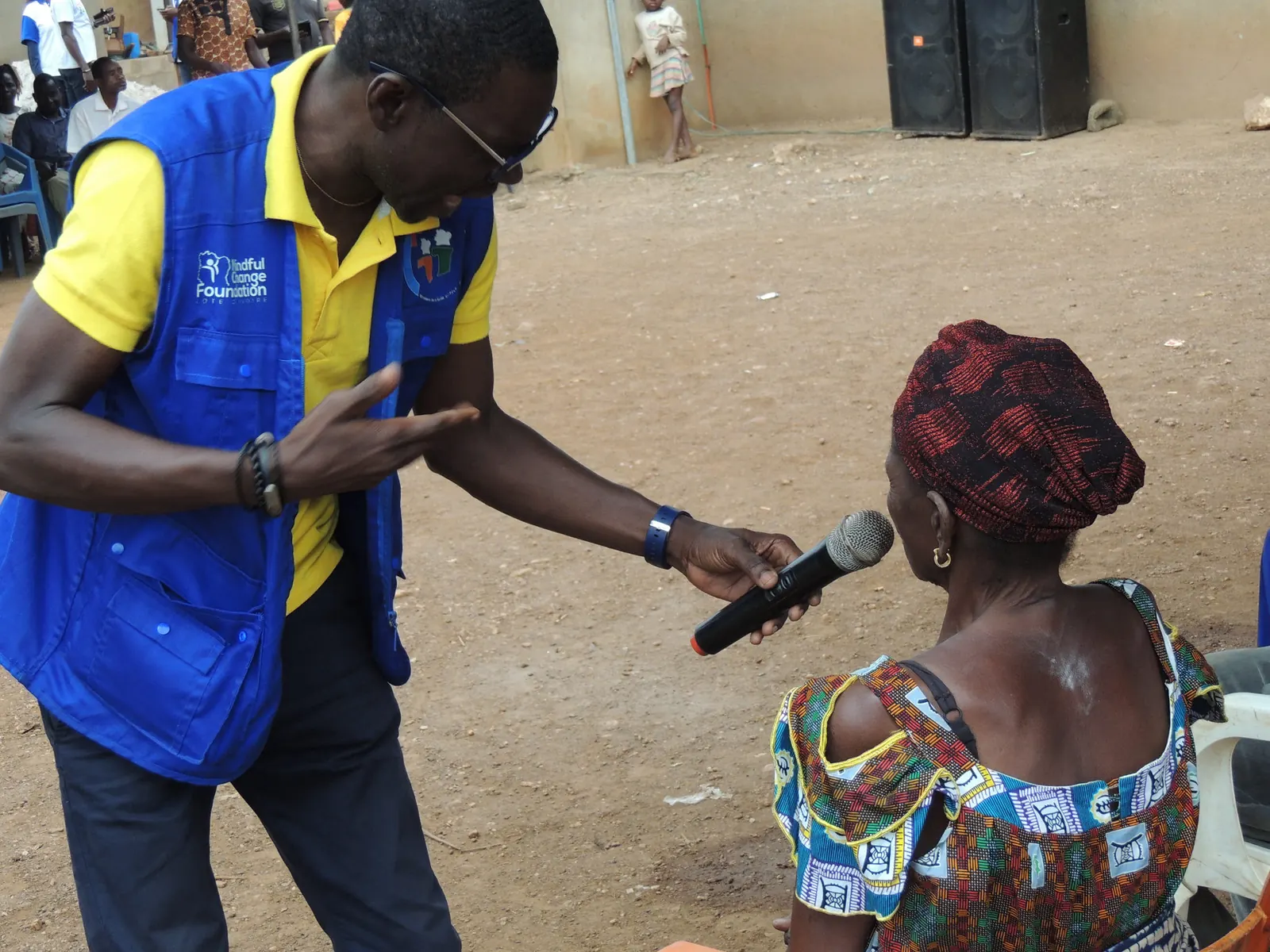 KAMBénéficiaire, mère d'un enfant épileptique — Djamalakro, Brobo
Ils nous font confiance